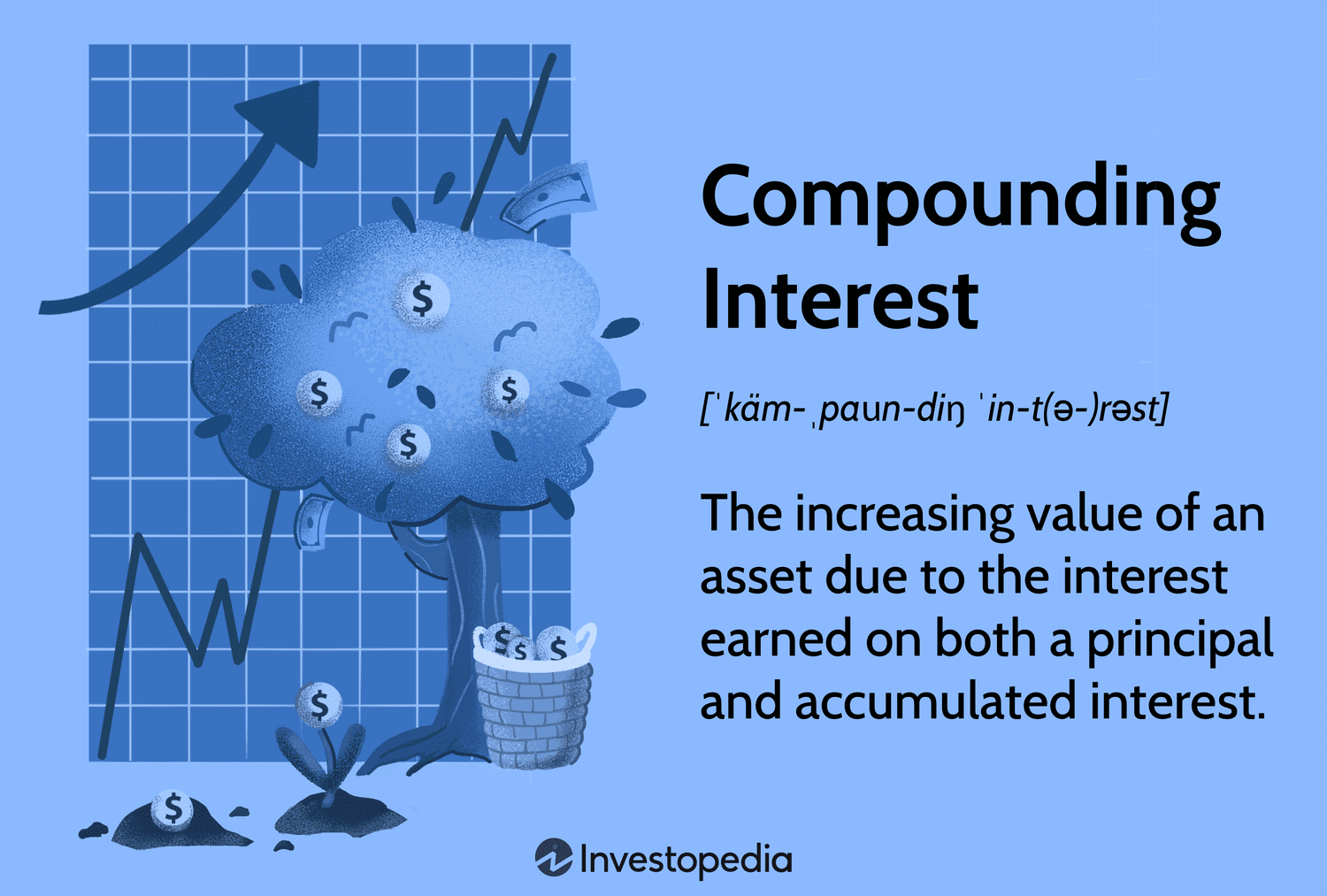
Understanding Compound Interest
Compound interest is one of the most powerful concepts in personal finance. It allows your money to grow by earning returns on both your original investment and the returns accumulated over time. Unlike simple interest, which is calculated only on the original amount, compound interest can help your savings grow faster over longer periods.
Understanding how compound interest works can help you make better saving and investment decisions and build long-term financial security.
1. What Is Compound Interest?
Compound interest means earning interest on your initial deposit as well as on previously accumulated interest. Every time interest is added to your balance, the amount available to earn future interest increases.
For example, if you deposit Rs. 10,000 in an account that earns a hypothetical annual return of 10%, your balance becomes Rs. 11,000 after one year, assuming annual compounding and no fees or taxes.
2. Difference Between Simple and Compound Interest
Simple Interest
Simple interest is calculated only on the original amount. If you deposit Rs. 10,000 at a simple annual interest rate of 10%, you earn Rs. 1,000 every year.
Compound Interest
Compound interest is calculated on the original amount plus previously accumulated interest. As a result, the amount earned can increase each year.
This difference becomes more significant over longer periods because compound interest allows accumulated returns to generate additional returns.
3. How Compound Interest Works
Consider an example where you invest Rs. 50,000 at a hypothetical annual return of 10%, compounded once per year.
- After Year 1: Rs. 55,000.
- After Year 2: Rs. 60,500.
- After Year 3: Rs. 66,550.
- After Year 4: Rs. 73,205.
- After Year 5: Rs. 80,526.55.
This example assumes a constant return and excludes fees, taxes, and inflation. Actual investment returns may vary and are not guaranteed.
4. Why Starting Early Is Important
Time plays an important role in compound growth. When you start saving or investing early, your money has more years to generate returns and benefit from compounding.
For example, someone who starts investing at age 20 may have more time to benefit from compound growth than someone who starts at age 35, even if both contribute similar amounts.
5. Reinvest Your Earnings
Reinvesting means using the returns you receive to purchase additional investments instead of withdrawing them. This can increase the amount of money working for you and support long-term growth.
Some investments automatically reinvest earnings, while others require investors to make this decision themselves. Always check the product’s terms and possible charges.
6. Understand the Compound Interest Formula
The standard compound interest formula is:
A = P (1 + r/n)nt
- A: Final amount.
- P: Original investment or principal.
- r: Annual interest rate expressed as a decimal.
- n: Number of compounding periods per year.
- t: Number of years.
7. Common Mistakes to Avoid
- Starting too late because you are waiting for a large amount of money.
- Frequently withdrawing accumulated earnings.
- Ignoring fees, taxes, and inflation.
- Believing every investment offers guaranteed compound returns.
- Choosing financial products without understanding their risks.
8. Develop a Long-Term Financial Habit
Make regular contributions according to your income and financial goals. Choose suitable savings or investment products, understand their terms, and review your progress periodically. Patience and consistency are important when building wealth through compounding.