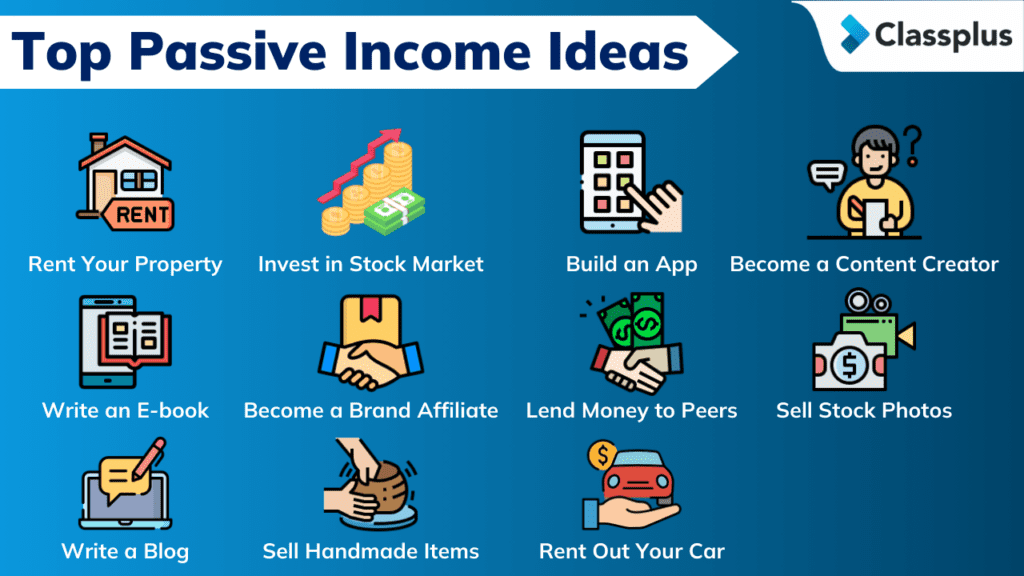
Understanding Passive Income
Passive income is money earned from activities or assets that do not require continuous daily work. It allows people to create additional income sources alongside their regular jobs, businesses, or studies.
Although passive income can reduce the need to exchange time directly for money, most income sources require initial effort, investment, maintenance, or regular management. Building a reliable passive income stream takes patience and planning.
1. Start a Blog or Niche Website
Creating a blog or informational website can become a source of long-term income. You can publish useful articles about technology, education, finance, health, or business.
Once your website attracts visitors, you may earn money through display advertisements, affiliate marketing, or sponsored content. However, success requires quality content, search engine optimization, and consistent updates.
2. Create a YouTube Channel
YouTube allows creators to publish educational videos, tutorials, entertainment content, and product reviews. Once a channel meets the platform’s monetization requirements, eligible creators can earn revenue through advertisements and other features.
Older videos may continue attracting viewers and generating income, although earnings depend on audience interest, advertising demand, and platform policies.
3. Invest in Dividend-Paying Stocks
Some companies distribute a portion of their profits to shareholders through dividends. Investors who own eligible shares may receive these payments according to the company’s dividend policy.
However, dividends are not guaranteed. Share prices can fall, and companies may reduce or stop dividend payments. Research a company’s financial position before investing.
4. Consider Mutual Funds
Mutual funds collect money from multiple investors and invest it in assets such as stocks and bonds. Some funds focus on income generation, while others aim for long-term growth.
Before investing, check management fees, investment risks, historical performance, and the fund’s objectives. Past performance does not guarantee future results.
5. Create and Sell Digital Products
Digital products can generate income after the initial creation work. Examples include e-books, online courses, website templates, design resources, and educational guides.
You can sell these products through suitable online platforms or your own website. Good quality, useful information, and effective marketing can help attract customers.
6. Start Affiliate Marketing
Affiliate marketing allows you to earn commissions by promoting products or services through special referral links. When someone makes an eligible purchase through your link, you may receive a commission.
You can promote products through a blog, website, YouTube channel, or social media account. Always provide honest recommendations and clearly disclose affiliate relationships.
7. Earn Rental Income
People who own property may earn income by renting houses, apartments, shops, or office spaces. Rental income can provide regular cash flow, but property owners must consider maintenance, taxes, vacancies, and tenant management.
8. Sell Stock Photos and Graphics
Photographers and graphic designers can upload original photographs, illustrations, icons, and design resources to suitable marketplaces. Customers may purchase licenses to use these resources, allowing creators to earn from their previous work.
9. Build an Online Course
If you have knowledge of programming, graphic design, digital marketing, language learning, or another useful subject, you can create an online course. Once published, the course may generate sales over time, although updates and student support may still be required.
10. Choose the Right Passive Income Strategy
Select an income source based on your skills, available money, interests, and financial goals. Some methods require more time, while others require capital and involve financial risk. Start with one realistic idea, understand its costs, and develop it gradually.